
Philly Fringe Dispatch, Week 3
a gross clown, a trauma clown, a fish clown, a spaced-out clown, a clown who won't leave, master clowns, mourning clowns, and more

If, during the Fringe, it seems like my writing features underdeveloped thoughts and unedited prose, it's because it does. While lack of editing is the privilege (and problem) of many a newsletter writer, the sheer quantity of what I'm trying to write about this month just doesn't allow the time for thorough editing and for ideas to properly ripen.
Monday
VILE, Francesca Montanile Lyons solo clown show, makes clever and cute use of illustration and animation, also by Montanile Lyons, to frame and support her act. She is a sad clown, with a sitcom introduction and haunted by Jerry Seinfeld, in a show about the displeasures of modern life. As she mimes swiping on her phone, the projected illustrations show the videos and dating profiles she's scrolling and swiping on. Memorably, a pizza delivery shows up while her nails are wet, so she eats it with her feet, offering new meaning to the concept of the struggle meal. Besides holding it together through the mundane, there's a darker thread of sexual violation.
After a bit with a bag of marshmallows, Montanile Lyons introduces a bug made of the confection. She exits, returning to perform as this creature, who explains that he is a sprite who induces men to sexual misconduct. Later, her clown’s healing journey involves learning about BDSM and going slug-mode via pallet wrap. Finally, Montanile Lyons breaks character, removes her red-nose make up, and speaks candidly of her own healing. It’s a touching moment. Continues September 25 at the Asian Arts Initiative Black Box.
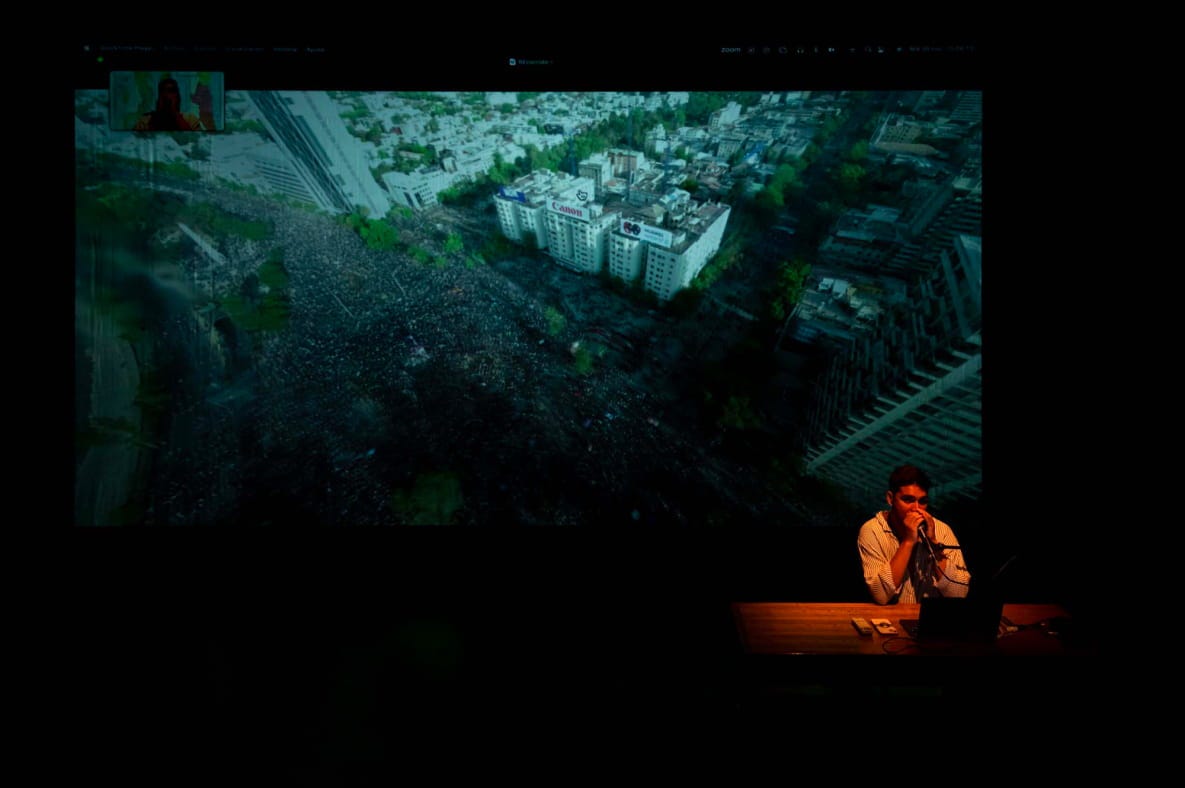
It’s so wonderful to see international artists in Philly. Props to Cannonball producer Nick Jonczak for bringing REMINISCENCIA, a solo performance by Malicho Vaca Valenzuela, an actor, writer, and director from Chile, to the Fringe. Valenzuela walks the audience through his birthplace, his home, and city squares of Santiago using Google Earth and other digital tools (the project began in the heights of the pandemic), projected on a large-scale screen behind him in Icebox Project Space. He traces a narrative both personal and political, emphasizing the marks made by people as they’ve moved through physical space not just as traces of past presence and activity, but as mysteries whose meaning can only be unlocked in collective memory.
Tuesday
An Evening with Complicity Huffman is a performance work from Fargo Nissim Tbakhi, whose poetry collection TERROR COUNTER was just longlisted for the National Book Award.
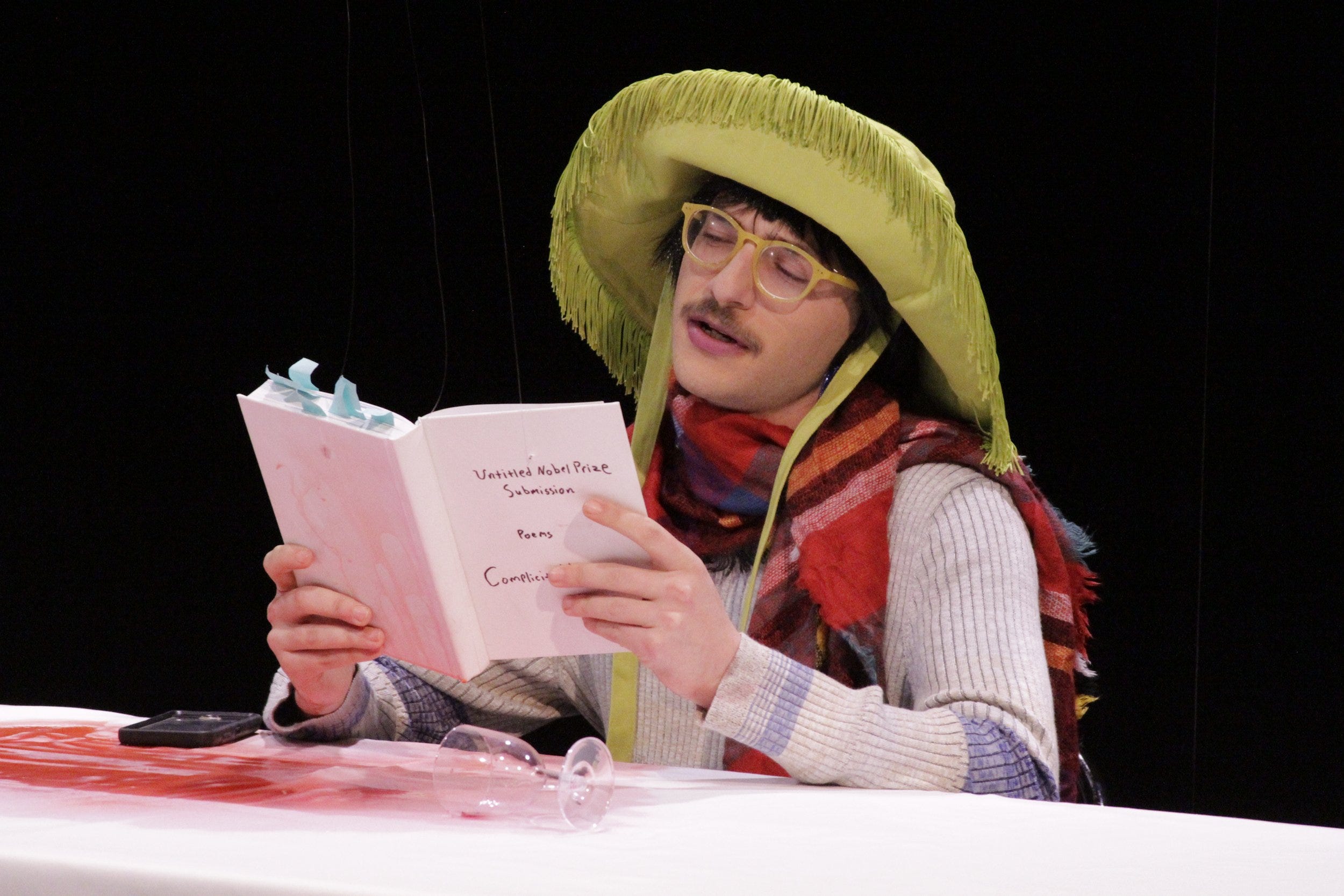
Tbakhi opens the stage door to enter, and a glass of wine on the table is knocked over and spills. Wearing a lampshade of a hat as part of an ensemble befitting an aging boomer poet—the titular Complicity Huffman—he enters and passively aggressively argues and berates someone on the phone, who turns out to be a sensitivity reader of Huffman’s new book, Untitled Nobel Prize Submission. He sits, turns the brim of the hat up revealing his face and a dark mustache, and makes no mention of the spilled wine. Huffman is an Israeli from Manhattan, and Tbakhi minces no words (or, perhaps, many) in his satire of a particular set of the literary world and non-profits with this self styled “peace poet” who can barely pronounce even the “P” in Palestine and writes poems with titles like, “Boycott the Trees.” Unsurprisingly, Tbakhi’s use of language is a strength.
Tbakhi occasionally pumps red fluid on the floor throughout the performance, and though it's described as blood in promotional copy, it could equally read as wine given what’s on the table. There’s “chocolate hummus” taken to gross excess, and a possession. Tbakhi, as Huffman, rarely engaged directly with the audience and its reactions, but the moments when he did were ripe. At times dense, the satire is nevertheless sharp. I can see why Tbakhi classes himself a performance artist, but this is very much like theater, and a touch more theatrical proficiency and direction would take it further and refine Complicity Huffman’s edge.
Wednesday
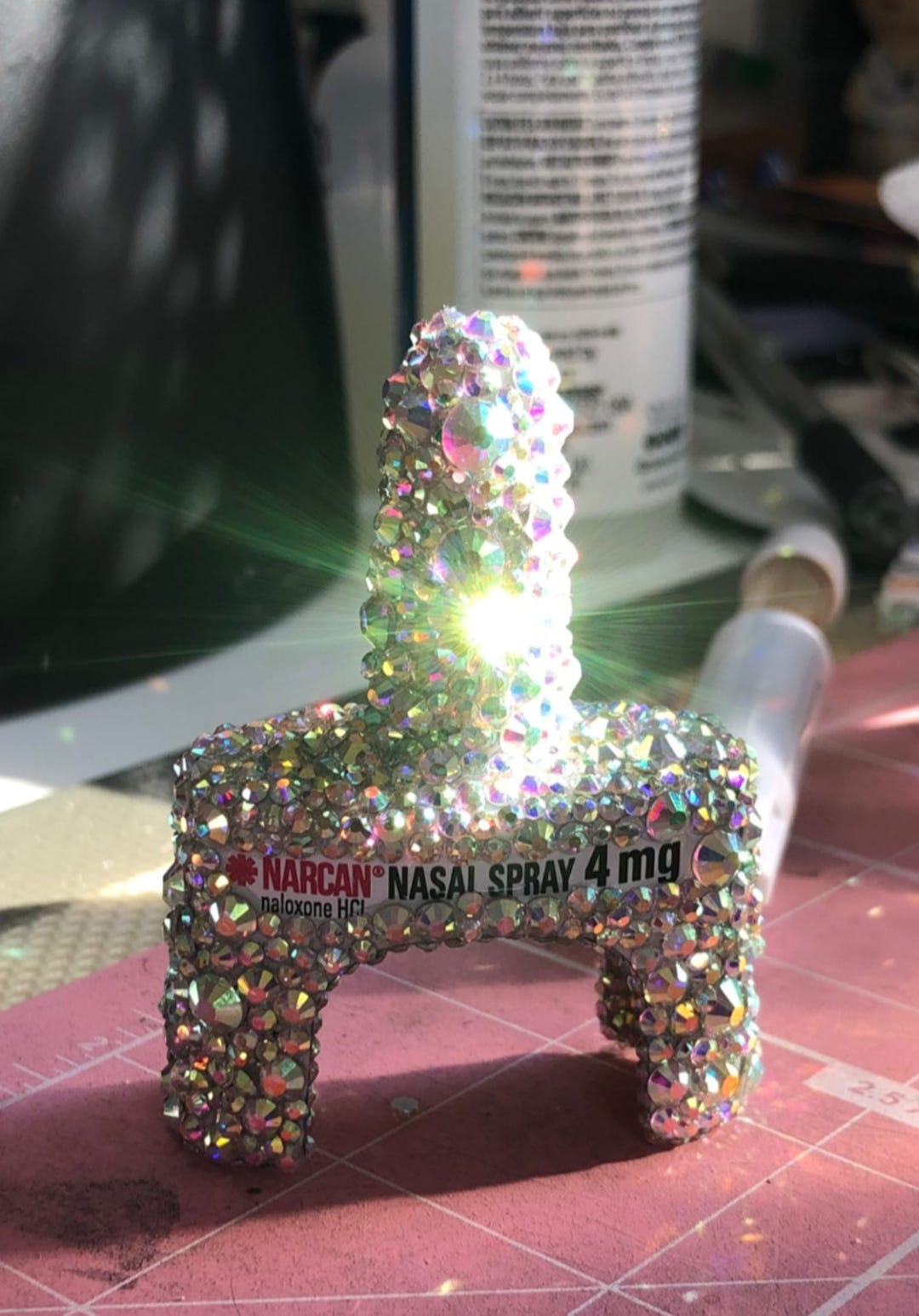
In Spank Bank Time Machine, trauma clown John Michael introduces the spank bank as a time machine that allows you to revisit your best orgasms The show that proceeds from there, as raunchy as it is, is a deeply touching remembrance of lost loved ones: his mother, a childhood friend to a tragic accident, and his best friends to overdose. Thus the nut of the play is that Narcan, the nasal spray version of the opioid antagonist naloxone, is a time machine in that it can reverse fatal overdoses. Audiences are given a demo of how to use Narcan, and leave the show with a supply, courtesy a partnership with Prevention Point. A soundtrack of well-known songs rendered in 8-bits keeps things in clown land. I laughed. I cried. I poured water on John Michael’s face to get imaginary cum out of his eye as he enacted a scene of what his friends are up to in gay heaven (consent is solicited for audience participation!). There is a twin, PG-13 version with a different first act for less mature audiences. Organizations and institutions looking for innovative approaches to public health messaging should pay attention.
Thursday
FISH is about a fish that wants to be a woman. As a fish, Funmi Adejobi has it all: treats (gummy candy), an exercise ring (hula hoop), and bubbles, until she pulls a cord labeled “DO NOT PULL” and, through ridiculous physical storytelling, is swept down a drain to open waters. Beached, she discovers she has legs, and no idea how to use them. The audience is drafted to instruct her to stand, walk, and speak. One lesson ends in musical chairs. Another sets two members of the audience debating for and against pescetarianism, to the fish’s horror and delight. There’s Shakespeare—Lance complaining about his dog, and then Hamlet. It’s all rather zany and silly, quite fun, until a final scene which has fish-human dissatisfied with the state of being human and asks the audience for reasons to stay alive. This knocked me out of the show.
Dambuzdo is an “anti-genre” immersive event from choreographer nora chipaumire that is part party, part dance, part concert. Party is the dominant vibe, as coolers full of beer, canned cocktails, and bottled water (a later reference by the artist to other non-alcoholic drinks besides water implied a broader welcome for non-drinkers than we actually got) greeted patrons on the way to the theater’s stage, which was transformed by hanging, translucent flats that were occasionally lifted in or out. Audiences were free to wander the stage, the steeply raked house was closed off, and seats were only available upon request from ushers.
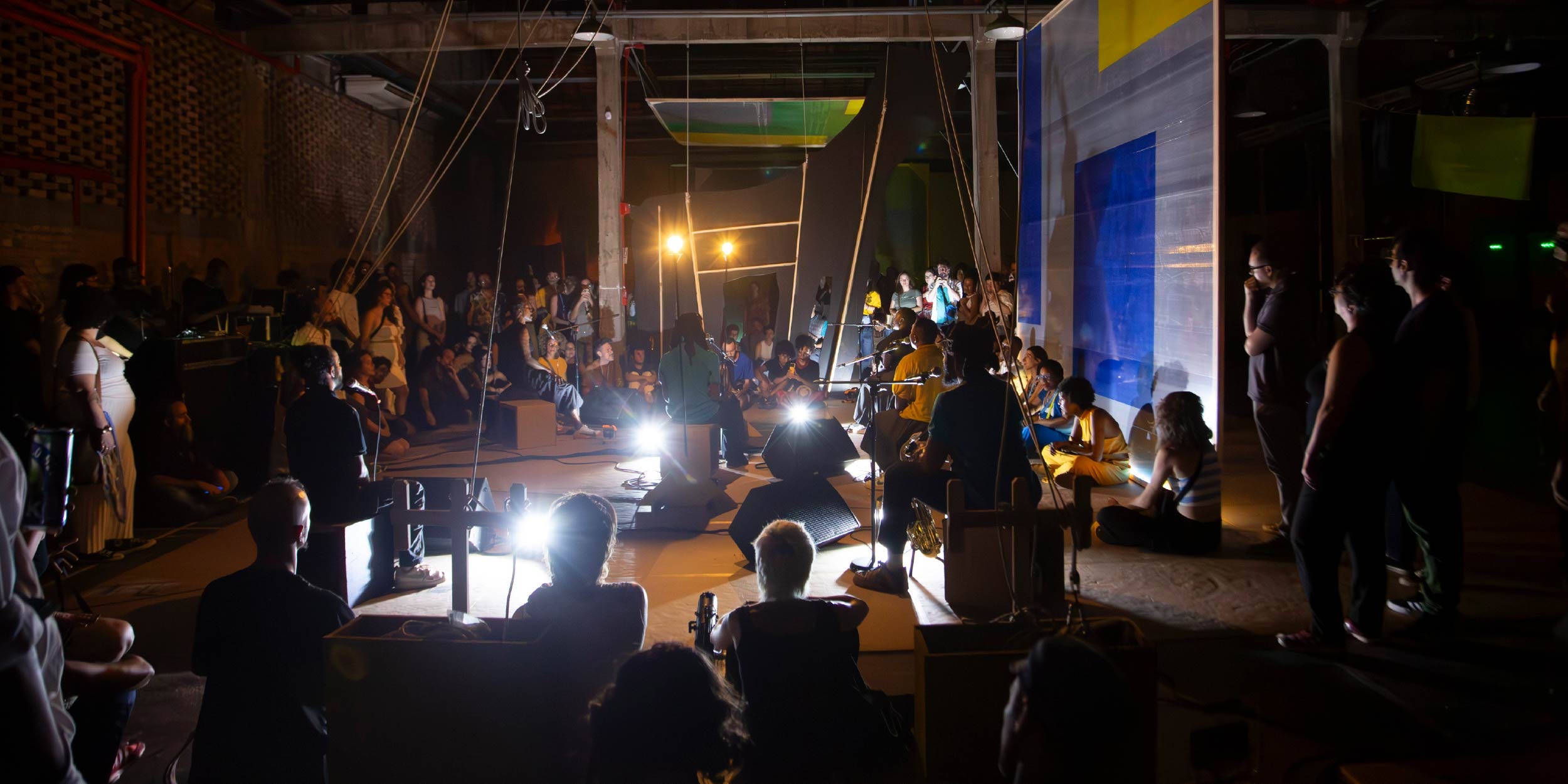
The overall feeling is one of cultural immersion, especially as chipaumire mentions, more or less explicitly, that that’s her goal. The music is great, the dance is great. There's mud throwing, soccer, a parade proclaiming “Hallelujah.” If you can see it, that is. The crowdsize rarely made for comfortable viewing, unless you're right at the front, and depending on the sequence, if you are, you might be worried about being a little too close. I think this would work much better with an audience 15% smaller, and it didn't help that there was a photographer and cameraman in the house as well, moving around in the audience to document the performance. At one point, the audience began to crowd around me as part of the action shifted toward where I was, and I had to excuse myself to somewhere where nothing was happening as an anxiety attack began to creep on. Only very few people grooved along with the dancers, or sat or kneeled to open up sightlines for others, at least until we were invited to sit and gather round for the music.
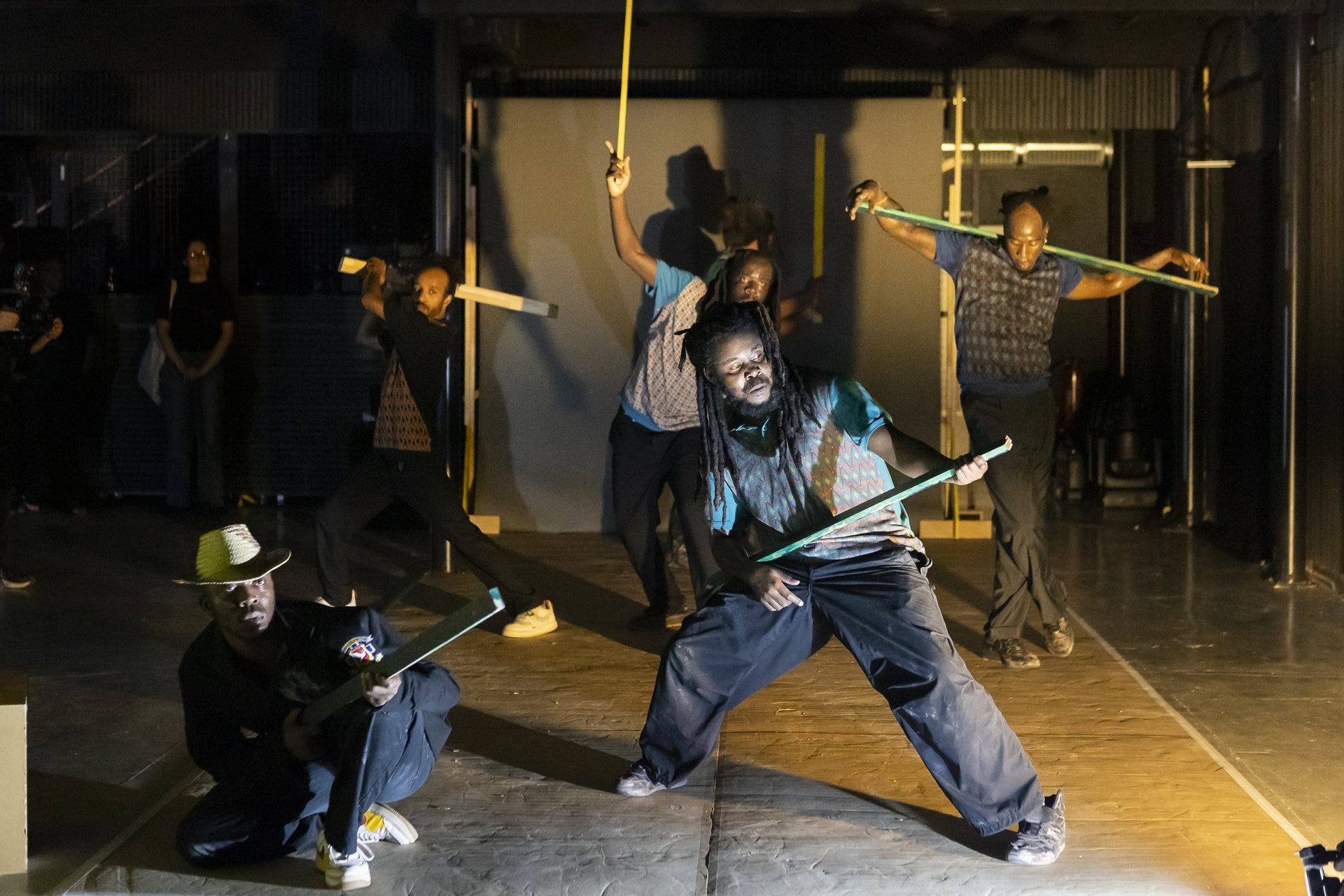
Too bad, as what I did see was great, and it made me curious to learn more about the culture and history of Zimbabwe. A moment where, suddenly, some of the dancers had put on clean shirts, and moved and posed with long, colorful sticks evoked both street fashion and something more martial. In trying to be many things at once, I think Dambuzdo was less than the sum of its parts at FringeArts. I think it would work better in a more expansive space, where the piece, and the audience, has room to breathe (warehouse party, anyone?).
Meat Show in Space puts “real man” Meat Show (Alice Gillette, out of Denver) in space, cleaning up space trash with his space garbage truck. There's a theme here about masculinity, I think of a child's idea of manhood—what could be cooler to a six year old boy than a space garbage truck—but I'm not sure what to make of it. There's some lack of specificity that keeps this un-moored and floaty, but maybe that's the idea. Live space music score by Bryan Richard Martin, who also voices NASA, underscores almost the entire show and contributes to a relaxed, spaced out vibe that perhaps locked the rhythm of the show into space as well.
Friday
My Orc, Cicero takes its audience on a not-so-epic quest into the heart of a World of Warcraft guild’s rise and fall. For readers who aren't nerds, or simply have their heads in the ground, WoW is massively multiplayer online roleplaying game, where players organize themselves into “guilds” for both social and gaming purposes. John Miller Giltner, in what's becoming their signature PowerPoint and YouTube (and here, WoW) style, presents a narrative of the guild they played in and rose to leadership of, leading to a crisis and split. You might not be surprised to learn that this was a leftist guild, where players roleplayed not only their characters, but their politics (eat your heart out, asses.masses). Giltner is joined by a wizard, played by Jonathan Schlieman, who makes appearances to explain parts of the game and background details, who occasionally joins Giltner in staging elements from fantasy roleplay—Giltner, casting a spell, makes the Wizard speak in other languages, even orcish.
The absurd and ridiculous details of niche gaming drama offer abundant material, but it's Giltner and Schlieman’s storytelling and charm that makes this work, even as Giltner turns heel.
Hosts Betty Smithsonian and Sarah Knittel enter like cult priestesses of antiquity to summon the Mischief Night Masters. Step one: get the audience chanting a non-sense phrase that, as it accelerates, turns out to be “Pour Some Sugar on Me.” Step two: I forget. Step three: humiliation ritual, step on whoopee cushions.
Geoff Sobelle is first up, entering playing a toy accordion, kind of faking the audience out that he’ll start singing. The song stops, applause, the song starts again of its own accord. The accordion won’t stop playing the same song, no matter what he does, he’s frustrated and he hands it off to someone in the front row, and produces various other small instruments, playing them, then handing them to members of the audience to play, and he conducts his chorus.
Next were the Philbillies (Trey Lyford with Ryan Daniel Pater) as former Philadelphians, now Florida Men, who sang a song about how climate change isn’t real, but you’re really hot, which led into a sing-along. The stage-business here was funnier than the bit itself.
In the middle of the lineup of aging men, enter Alex Tatarsky. “Sandwiched… and I am the meat” they tell us, while roasting the lineup and the Pig Iron School itself. A bit where they make someone in the audience slap them dragged on to hilarious effect as the first man they demanded hit them simply would not do it.
Aram Alan Aghazarian, in a disaster of a long black wig, did a bit with boogie boards that were painted as tombstones on one side. Death and surfing? Didn’t help that music cues weren’t working (though you never know what’s on purpose with this kind of thing), but I didn’t get it at all.
Our hosts introduced the final act, Quinn Bauriedel as The Mighty Finn, as being very late and “willing to do anything to get here.” Bauriedel entered and mimed modes of transit, from riding a horse to an action-sequence culminating in a truck-jacking, and when he finally “arrived,” condemned the audience for loving cliches and told a brief history of jokes, starting with the slip and fall.
One lesson from an uneven night with the masters: maintaining mastery of an audience requires active practice of the craft.
With all the masters back on stage for a curtain call, Smithsonian and Knittel thanked the Pig Iron School for “infecting Philadelphia with a whole generation of artists.”
L.A.-based clown Reshma Meister takes a simple bit to its logical extreme as The Guy at That Party, an awkward guy covered in tape who says he must be going and doesn’t leave. The Guy’s face is covered in tape, a cocktail glass filled with a bright green drink (with cocktail umbrella) is taped to one hand, and very long, curling fingers made out of tape. Like, longer than Salad Fingers. Meister gets comic mileage out of these fingers in several bits that punctuate and structure the main bit, which comprises nearly the entire show in a feat of iteration. Proof that sometimes less is more, and also that more is more.
Afterwards, a number of us milled about, discussing minutia and clowning and the imaginary 90’s genie movie Shazaam. We’d become that guy.
Saturday
I want to go see Gabi Shiner’s PLEASE and Cecilia Corrigan’s The Gay Divorce, both pieces that have shown at The Brick in Brooklyn, and both showing only this Saturday and Sunday, and I could make a matinee of the former, or attempt a double-header on Sunday evening. But I’ve seen so much solo comedy, and I have to keep up on these entries and also live my life, and I plan to stay in the neighborhood this afternoon and Sunday night.
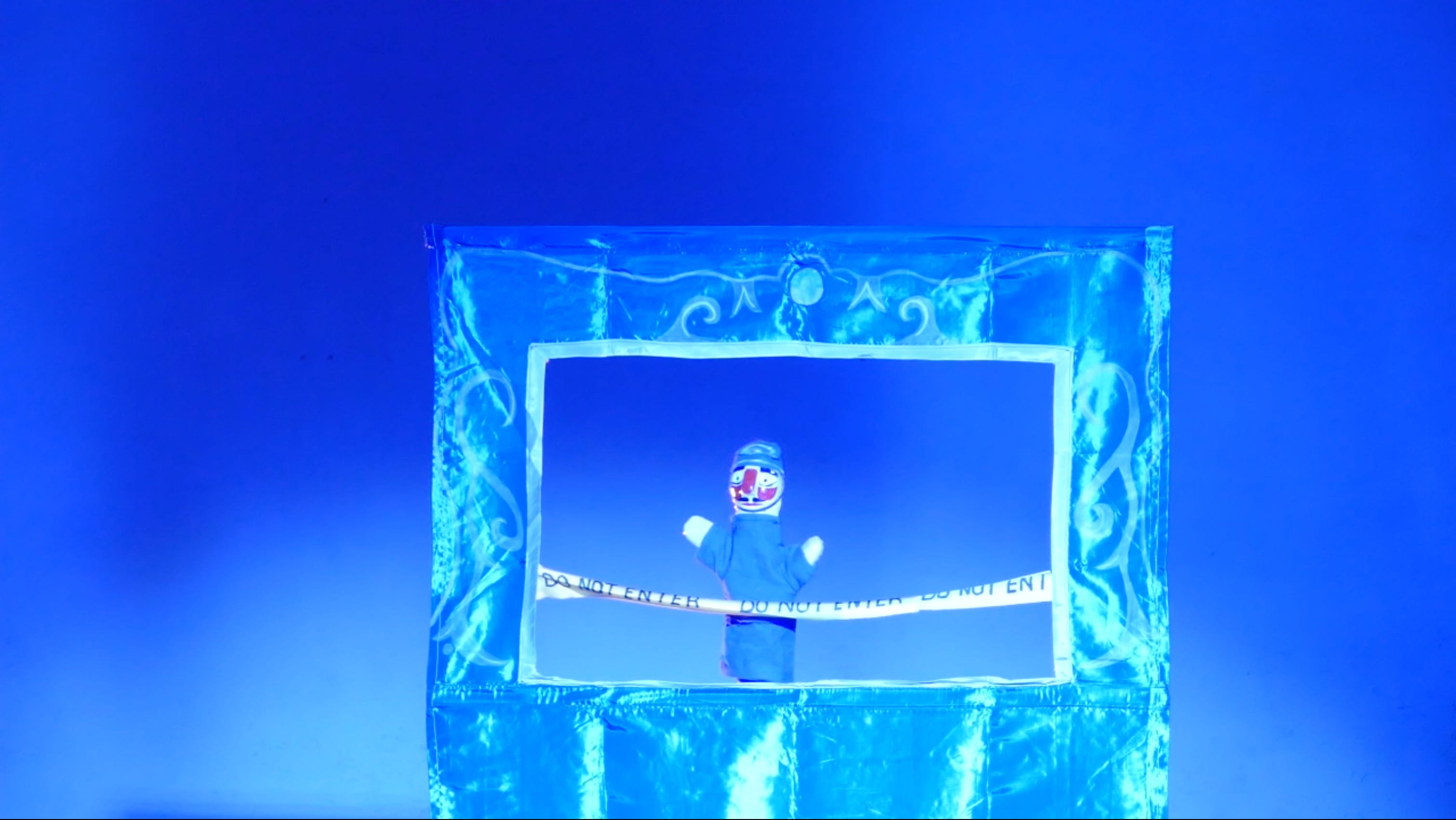
So my first show of the day is at Icebox Project Space. It’s workshop of Leda, a new work by Ollie Goss, playing to a packed house, maybe too packed, as only a small portion of viewers could take in an immersive component, and the sightlines to some stage action were disrupted by the mass of bodies in chairs. Good problems to have. Taking its themes from the English folk poem about enclosure, “The Goose and the Common,” Leda has a lot going on: inflatables, hand puppets, mechanized puppets, projection, eggs, geese, audience participation, a charming score, a funeral, and an animatronic fish that quotes Marx. Early on, a massive inflatable rolls and flops onto the stage. It rips open, and Goss pops out, only to disappear back within it before out pops a puppet to welcome us. Delightful! The various segments are charming, smart, and inventive, but often disconnected—this run in Cannonball is the first time it’s been shown as an evening length work—as the piece moves in fits and starts between them, in want of an overall structure or container, or at least more connective tissue. Future versions of this piece are something to look forward to, and Goss is an artist to watch.
I walk around the block to Pig Iron to get on the wait-list for sold-out Dumb Hub closer, A Young Man Dressed As A Gorilla Dressed As An Old Man Sits Rocking In A Rocking Chair For Fifty-Six Minutes And Then Leaves.
The man in the gorilla suit walked on stage and sat in his chair and rocked slowly, to a point that I was a little disappointed by how little he did. After fifty six minutes, he left. But there was shushing, applause, booing, fighting, a dance party, spilled beer, prayer. This absurd structure of nearly nothing happening—once, he winked, or so some members of the audience claim—facilitated the audience spontaneously organizing itself for fifty six minutes. asses.masses, eat your heart out.
Sunday
I had planned to see a matinee of Lions, Lightning Rod Special’s latest, last week, but had entered it on my schedule as 12:30pm instead of noon, so I showed up 20 minutes late rather than 10 minutes early. Opting against late entry, this is how I ended up at Mon Carton.
In many ways, Lions is an exceptional Fringe show. It's almost too competent. On the one hand, this would be at home in a curated festival, the sound, prop, and the costume design that interpolates the late 19th century into the 1970s are excellent, the script is funny and personal, the performances are vulnerable, even brave. On the other, parts of the show remind me of things I’ve seen before, including the well-trod subject matter—the death of parents—and elements of the staging, which is competent, skillful even, and smart. It’s especially smart in how it incorporates set up and break down, notably of dozens of props set on long tables that evoke a masculine 70’s and 80’s. The first time the stage door suddenly opens and blows foam onto stage, and Alice Yorke and Scott R. Sheppard, who've also written the show, rush over and struggle to close it, it had a comic energy. The second time I thought, right, I get the metaphor.
What I'm doing here is trying to put my finger on what didn't work for me. It certainly wasn't the very beginning of the show, a sequence that starts when the stage door opens and a storage bin on a furniture dolly rolls to center stage. Nor was it the end, when, Yorke pulled out her dad's real laptop and read lists he wrote, and the constant watering of my eye was no longer attributable only to my lingering Bell’s Palsy and the high ragweed count; neither when the sound smoothly switched from her reading those live to a recording as she joined Sheppard in picking up and putting away props.
Maybe it was the impact on the performances of an early Sunday matinee at the end of a run after a late show the night before which also followed an early matinee. Maybe it was the kind of second start that came once all the props were laid out, because I was so fully invested in the task of placing them that interrupting that flow could only disappoint me, or something else in the internal rhythms of the 70-minute piece. Maybe it's because my life has seen more than the average quantity of the mundane preparations and duties that surround death that are dramatized here, not out of immediate personal loss, but the peculiar familiarity of having family in the funeral business.
This is a good show. It's a beautiful tribute to the artists’ fathers. Death and estates are painful and difficult. They're also, often, surprisingly slow, as Lions shows. There's a lot of work for those who live. They're also messy. Maybe that mess of grief and stress and work is so immense that it just can't be contained on stage, but goddamnit, Yorke and Sheppard try, and then they clean it up.
I may have been staying in the neighborhood Sunday night, but it wasn’t to twiddle my thumbs. After making a curry, I saw Nicole Burgio and Miranda Jo Kramer’s Egg Project, which some Pig Iron folks talked up. It looked like it would be unlike anything else in the festival, even among circus acts (and I should see at least one circus act, right?), for its combination of technical skills—Burgio’s signature is hair suspension—physical theater and magic. Staying near home is just the extra selling point I need. Apologies to Shiner and Corrigan.
Burgio and Kramer transformed the former sanctuary at the Calvary Center for Culture and Community, a Methodist Church turned community space, into an atmospheric swamp. This, though, was just a lounge and waiting area, and the performance took place not in Curio Theatre’s space downstairs, but in the two story chapel, with rigging suspended from the center of the dome high above.
A work in progress about trauma and recovery, the physical work is excellent, both inside and outside the acrobatics, unsurprising as Burgio teaches acrobatics at the Pig Iron School and Kramer is an alum. I was unsure about the relationship between the two performers, a tricky thing in storytelling that relies entirely on physical performance rather than speech, but the narrative is clear. The illusions, many of which produce eggs, are surprising and affecting, grounded in committed performances. The body really does keep the score, and sometimes the score is eggs.
The artists have also taken great care in how they relate to the audience, rarely seen even in well-resourced work. They not only dressed the entrance to the space, but gave gifts to the audience on entry and exit. This is special work.
I was struck by a review of the festival in American Theatre, where the author, apparently unfamiliar fringe theater, finds clowning, immersive and participatory work to be a revelation.1 The writer, Pria Dahiya is a recent Carnegie Mellon BFA directing graduate and, though Pittsburgh has some clowns (they sent at at least two to the Philly Fringe—Pretty Dog Pop Star, which I recommend, continues 9/25-26 and The Final Badge runs 9/25-27), seems to have both a naivety and genuine curiosity about these forms. It’s a reminder, as she argues, of the power of these forms. It’s also a reminder, in a city crawling with clowning, where Pig Iron alums are infiltrating some of its institutions and where much of its most exciting theater is crammed into September, about the fringe’s relationship with the mainstream: outside of it.
Those of us who do this, whether it’s ensemble work or clowning or alt comedy or experimental puppet shows or whatever you call the particular weird thing that you do, are the weirdos even among theatricals, that is, weirdos even among a class of weirdos and outsiders.2 As Bradley Wrenn said during the Dumb Hub, “it’s so nice to be performing somewhere that actually wants you there.”
This points to some blind spots of mainstream American theater and theater education, even, or perhaps especially, among its most prestigious conservatories. These institutions are disconnected not just from the realities of production for many artists, but from forms both emerging and revived. Perhaps more importantly, it’s a disconnection with the broader culture that the theater is supposed to be part of, both drawing from and reflecting on, and in which audiences—or potential audiences—live and work. I don’t think it’s a coincidence that some of the most exciting work in the festival is in conversation with non-theatrical forms, whether it’s My Orc, Cicero and online gaming, Ollie Goss’s work informed by visual art practices, or the work of a poet like Fargo Nissim Tbakhi. And on the commercial side, immersive entertainment seems to be a growing category: Netflix House Philadelphia opens in November in King of Prussia. This is, I grant, I think, an optimistic read of the problem, as we are in a worsening literacy crisis. But, as I have long argued to anyone willing to hear it, I believe there’s an audience for theater that most theaters do not speak to, or even attempt to speak to (and this is where Dahiya and I would seem to agree),3 which is hungry for events that are deeper than spectacle, as her personal account affirms.4
The reasons for such disinterest are institutional, political, and economic, of course, topics for another day. But as institutional theater seasons continue to dwindle and grow risk-averse, it’s the DIY and the experimental, the risk-taking work that we see in the fringe that are the future of American theater. And, this part is not-so-optimistic, it’s probably also the level of resources many of us will have for the near future.
With recession and state-censorship looming and state support for the arts at lows not seen since before baby boomers entered the workforce, all but the most robust or commercial of institutions are likely to continue to atrophy and could face slow or swift collapse unless they transform. There will come a time, I hope, to rebuild. In the meantime, it will be scrappy outsider theater artists leading the way, building their own audiences with new work that gets people excited to go to the theater—or the weird room in the back of the bar. And when the time comes to rebuild, like the small mammals who survived the Cretaceous–Paleogene extinction, the weirdos will be there.
She also make some inaccurate claims, refers to an artist with the wrong pronouns, and, in my opinion, draws faulty conclusions, presumably because of this lack of familiarity.
One could go on here about how mainstream theatricals and artists have not just done away with the weirdo reputation but gained significant cultural status, which is why a full half of the performances that Dahiya wrote about seeing were curated and presented by FringeArts—which is to say, not fringe at all. I digress, and this digression is part of the thesis of Chris Davis’s The Presented
Though I don’t think, actually, that spectacle is the primary mode of most non-profit theaters.
This summer’s Williamstown season could be described as an attempt to speak to this audience by leaning into spectacle.